• Skip to primary navigation
  • Skip to main content
  • Skip to footer
Cropped Isoc Picisoc Jpg.jpg

PICISOC.org

The Internet Society in the Pacific

  • Home
  • About
    • What is PICISOC?
    • History of PICISOC
    • PICISOC Members
    • Code of Conduct
    • PICISOC Netiquette Guidelines
  • Board
    • PICISOC Board 2026
    • 2023 Board Members
    • 2021 Board Members
    • 2020 Board Members
    • 2018 Board Members
    • 2014 Board Members
    • 2013 Board Members
  • Events
    • PacIGF 2023
    • Pacific Internet Governance Forum (PacIGF)
    • PacINET
    • International IGF Reports
    • ICANN Meeting Reports
    • Pacific Regional Meeting Reports
  • Join Us
  • SIGs
    • Research and Development Partners
    • Pacific Islands Education
    • Pacific Islands FOSS
    • Pacific Islands GIS/RS
    • Pacific Islands Internet Freedom

Pacific Cyber Roundup – May 2026

Pacific Cyber Roundup – May 2026

Pacificcyberroundup

by Siosaia V.

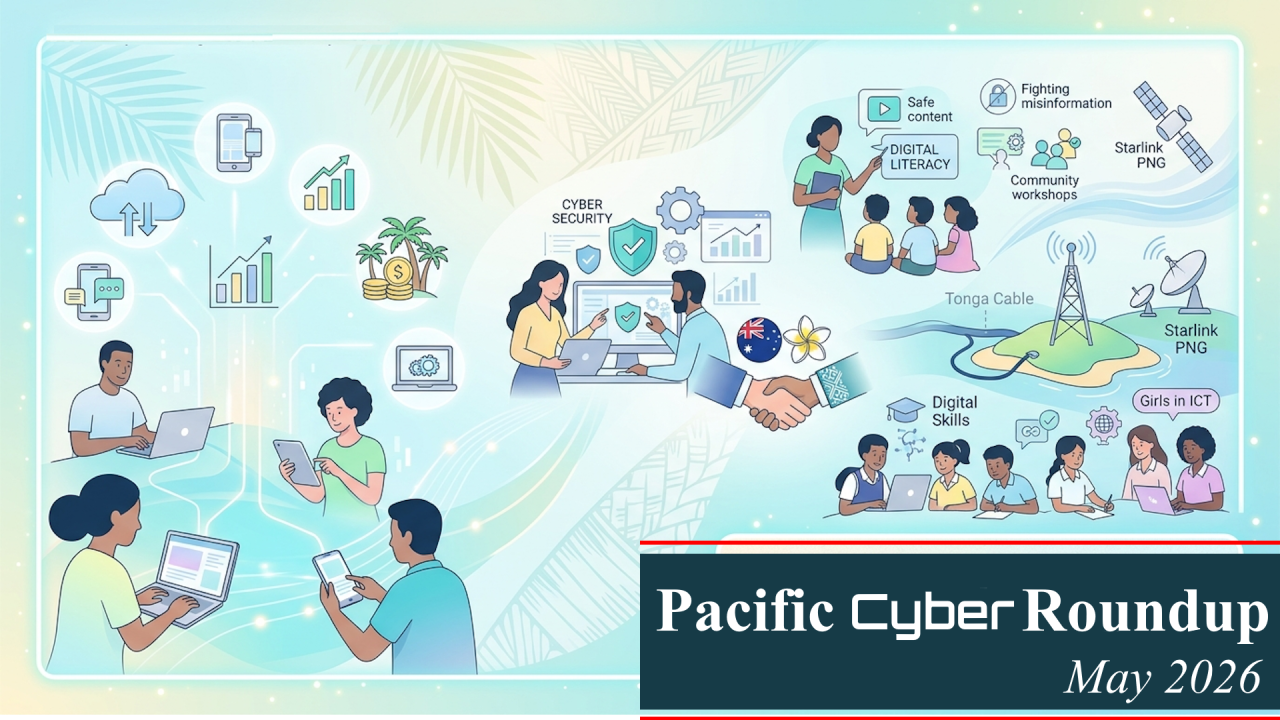
May 2026 was a significant month for cyber and digital affairs across the Pacific Islands, characterized by accelerating digital transformation, heightened concerns over cyber-enabled crime and online harms, and growing efforts by governments and regional partners to strengthen cyber resilience. Across the region, digital technologies continued to create new opportunities for economic development, connectivity, and service delivery. However, these opportunities were accompanied by increasing recognition that without appropriate governance, cybersecurity, and risk management measures, expanding digital ecosystems can expose governments, businesses, and communities to a rapidly evolving threat landscape.

In the policy and governance domain, several Pacific nations advanced important legislative and regulatory initiatives aimed at strengthening digital trust and security. The Cook Islands unanimously passed a landmark Cybercrime Bill that criminalises offences including hacking, online bullying, and digital child exploitation while providing law enforcement agencies with enhanced investigative powers. Papua New Guinea continued to advance its national digital identity programme through legislation supporting the rollout of the SevisPass digital identity ecosystem, laying the foundation for more secure and efficient digital government services. In Fiji, the High Court delivered a significant ruling confirming that Magistrates have jurisdiction to hear cases under the Online Safety Act, providing greater clarity for the enforcement of online safety protections. At the regional level, leaders meeting to discuss transnational organised crime delivered a united message that no Pacific nation can effectively confront increasingly sophisticated criminal networks in isolation, with cybercrime and technology-enabled offending identified as growing regional concerns.

Cybersecurity capability development also received renewed attention during the month. Australia announced plans to embed a dedicated cybersecurity adviser within Samoa's Ministry of Communications and Information Technology (MCIT), reflecting a broader commitment to strengthening cyber resilience and technical capacity across the Pacific. At the same time, experts warned that the region's rapidly expanding digital infrastructure, increasing connectivity, and growing reliance on digital services are creating new vulnerabilities that must be addressed through investment in cybersecurity, governance, and workforce development.

Online safety remained a prominent issue across the region, particularly in Fiji, where multiple incidents involving AI-generated misinformation, fake news, impersonation, and manipulated content targeted media organisations, political figures, public institutions, and schools. These incidents highlighted the growing challenge posed by emerging technologies and the increasing sophistication of information manipulation. In response, governments, regulators, civil society organisations, and community leaders continued to promote responsible online behaviour, digital literacy, and public awareness. Documentary films, public education campaigns, online safety initiatives, and community workshops further demonstrated a growing regional commitment to addressing cyberbullying, online abuse, and harmful online content.

Digital infrastructure and connectivity developments continued to shape the Pacific's digital future. Tonga successfully completed its second international subsea cable, representing a major milestone in the country's connectivity and resilience ambitions and reinforcing the strategic importance of secure communications infrastructure in the region. At the same time, discussions intensified regarding the geopolitical significance and security of submarine cable networks, with experts highlighting both their critical role in supporting digital economies and their growing exposure to strategic competition and potential disruption. In Papua New Guinea, the National Court overturned a previous ban on Starlink services, paving the way for expanded low-Earth orbit satellite connectivity and potentially improving internet access for underserved communities.

Capacity building remained a strong feature of the Pacific cyber landscape throughout May. Vanuatu hosted its National Digital Week, which included a cybersecurity boot camp attended by more than 70 students and teachers, while Solomon Islands marked Girls in ICT Day with the participation of more than 200 young women, promoting digital inclusion and encouraging future careers in technology. These initiatives reflected a broader regional understanding that strengthening cyber resilience requires not only secure technology and infrastructure but also sustained investment in digital skills, cybersecurity awareness, and workforce development.

Overall, developments during May underscored a common theme across the Pacific: digital transformation continues to create substantial opportunities for economic growth, innovation, and social development, but it also introduces new risks that require coordinated action. Encouragingly, governments, regional organisations, development partners, industry, and civil society are increasingly recognising these challenges and taking proactive steps to build a safer, more secure, and more resilient digital future for the Pacific.

Coverage of these developments and other notable cyber, digital, and online safety stories from across the Pacific can be found below.

Article content
  • Papua New Guinea builds legal foundation for digital identity ecosystem (Biometric Update)
  • Cook Islands passes landmark bill to combat cybercrime and online bullying (Cook Island News)
  • High Court rules magistrates can hear Online Safety Act cases (Fiji Sun, FBC)
  • Samoa government distances itself from alleged crypto scam (RNZ)
  • Regional cooperation against transnational crime (Fiji Sun, Cook Island News, Fiji Village, PMN, FBC News)
  • PNG ICT Minister Orders Urgent Action on Online Content Restrictions (One PNG)
  • Ministers warn fake news offenders ahead of Fiji's 2026 election (Fiji Sun)
  • Biman warns political parties (Fiji Times)
Article content
  • Australia to embed cyber security adviser in Samoa (Samoa Observer)
  • Pacific digital growth fuels cybercrime risk, warns expert (Fiji Times)
Article content
  • Mother calls for stronger action on online abuse involving students (Fiji Village)
  • Pacific youth mental health warning linked to online harms (PMN)
  • Pacific film exposes cyberbullying harms (Fiji Sun, PMN, ABC, Samoa Observer)
  • Samoa launches a Regional Cyber Safety Outreach Program to help Combat the Growing Misuse of Online Platforms (Samoa Global News)
  • Tabuya calls out toxic online abuse (FBC)
  • Fiji's Online Safety Commissioner Warns to Use proper reporting pathways (Fiji Times)
  • Online Safety Commission condemns circulation of graphic images (Fiji Times, Fiji Sun)
  • PNG Pageant Figure Tyla Singirok Condemns Online Abuse (OnePNG)
  • The digital drug and dark side of AI (Cook Islands News)
  • Police warns social media users over unverified claims in investigation (Fiji Sun)
  • Cook Islanders targeted in Facebook advanced fee scam (RNZ)
  • Swift Wave Global emerges after BG Wealth collapse leaves Tongans reeling (Kaniva Tonga)
  • MP Ketan Lal reports fresh overseas extortion threats (Mai TV)
  • Meta removes controversial accounts (Fiji Sun, Fiji Times, ABC)
  • Education Ministry dismisses fake school closure notice (Fiji Village)
  • Fake Fiji Sun front pages expose dangers of AI misinformation (Fiji Sun)
  • AI-generated photo of the Anthony Saru Building on fire condemned (Solomon Star, AFP Fact Check)
  • FWCC warns public against fake online stories and impersonation (FBC)
  • Online Safety Commission warns over misinformation (FBC)
Article content
  • Tonga completes second international cable (Subtel Forum, Australian Government)
  • Trusted infrastructure, contested sovereignty: submarine cables in the Pacific (ORF Online)
  • Subsea cables emerging as the new underwater battleground (Tech Radar)
  • How Starlink and other LEO services can help unlock Papua New Guinea’s economic potential (Business Advantage PNG)
  • Solomon Islands’ Starlink workaround has connectivity lessons for the Pacific (Lowy Institute)
  • National Digital Week kicks off in Vanuatu (Island Business)
  • Girls in ICT Day draws 200 participants in Honiara (Solomon Times)
  • 16 new telecommunications sites across Solomon Islands come online (Solomon Star)
Article content
  • Fiji leads Pacific in AI and digital transformation (FBC News)
  • LTA moves payments online during M-PAiSA upgrade (Fiji Sun)
  • Bunnings launches online retail services in Fiji (Fiji Times, FBC News, Fiji Sun) LEAVING OUT RetailBiz, BANDT
  • Golf club goes online (Fiji Times)

9 June 2026

Pacificcyberroundup

by Siosaia V.

May 2026 was a significant month for cyber and digital affairs across the Pacific Islands, characterized by accelerating digital transformation, heightened concerns over cyber-enabled crime and online harms, and growing efforts by governments and regional partners to strengthen cyber resilience. Across the region, digital technologies continued to create new opportunities for economic development, connectivity, and service delivery. However, these opportunities were accompanied by increasing recognition that without appropriate governance, cybersecurity, and risk management measures, expanding digital ecosystems can expose governments, businesses, and communities to a rapidly evolving threat landscape.

In the policy and governance domain, several Pacific nations advanced important legislative and regulatory initiatives aimed at strengthening digital trust and security. The Cook Islands unanimously passed a landmark Cybercrime Bill that criminalises offences including hacking, online bullying, and digital child exploitation while providing law enforcement agencies with enhanced investigative powers. Papua New Guinea continued to advance its national digital identity programme through legislation supporting the rollout of the SevisPass digital identity ecosystem, laying the foundation for more secure and efficient digital government services. In Fiji, the High Court delivered a significant ruling confirming that Magistrates have jurisdiction to hear cases under the Online Safety Act, providing greater clarity for the enforcement of online safety protections. At the regional level, leaders meeting to discuss transnational organised crime delivered a united message that no Pacific nation can effectively confront increasingly sophisticated criminal networks in isolation, with cybercrime and technology-enabled offending identified as growing regional concerns.

Cybersecurity capability development also received renewed attention during the month. Australia announced plans to embed a dedicated cybersecurity adviser within Samoa’s Ministry of Communications and Information Technology (MCIT), reflecting a broader commitment to strengthening cyber resilience and technical capacity across the Pacific. At the same time, experts warned that the region’s rapidly expanding digital infrastructure, increasing connectivity, and growing reliance on digital services are creating new vulnerabilities that must be addressed through investment in cybersecurity, governance, and workforce development.

Online safety remained a prominent issue across the region, particularly in Fiji, where multiple incidents involving AI-generated misinformation, fake news, impersonation, and manipulated content targeted media organisations, political figures, public institutions, and schools. These incidents highlighted the growing challenge posed by emerging technologies and the increasing sophistication of information manipulation. In response, governments, regulators, civil society organisations, and community leaders continued to promote responsible online behaviour, digital literacy, and public awareness. Documentary films, public education campaigns, online safety initiatives, and community workshops further demonstrated a growing regional commitment to addressing cyberbullying, online abuse, and harmful online content.

Digital infrastructure and connectivity developments continued to shape the Pacific’s digital future. Tonga successfully completed its second international subsea cable, representing a major milestone in the country’s connectivity and resilience ambitions and reinforcing the strategic importance of secure communications infrastructure in the region. At the same time, discussions intensified regarding the geopolitical significance and security of submarine cable networks, with experts highlighting both their critical role in supporting digital economies and their growing exposure to strategic competition and potential disruption. In Papua New Guinea, the National Court overturned a previous ban on Starlink services, paving the way for expanded low-Earth orbit satellite connectivity and potentially improving internet access for underserved communities.

Capacity building remained a strong feature of the Pacific cyber landscape throughout May. Vanuatu hosted its National Digital Week, which included a cybersecurity boot camp attended by more than 70 students and teachers, while Solomon Islands marked Girls in ICT Day with the participation of more than 200 young women, promoting digital inclusion and encouraging future careers in technology. These initiatives reflected a broader regional understanding that strengthening cyber resilience requires not only secure technology and infrastructure but also sustained investment in digital skills, cybersecurity awareness, and workforce development.

Overall, developments during May underscored a common theme across the Pacific: digital transformation continues to create substantial opportunities for economic growth, innovation, and social development, but it also introduces new risks that require coordinated action. Encouragingly, governments, regional organisations, development partners, industry, and civil society are increasingly recognising these challenges and taking proactive steps to build a safer, more secure, and more resilient digital future for the Pacific.

Coverage of these developments and other notable cyber, digital, and online safety stories from across the Pacific can be found below.

Article content
  • Papua New Guinea builds legal foundation for digital identity ecosystem (Biometric Update)
  • Cook Islands passes landmark bill to combat cybercrime and online bullying (Cook Island News)
  • High Court rules magistrates can hear Online Safety Act cases (Fiji Sun, FBC)
  • Samoa government distances itself from alleged crypto scam (RNZ)
  • Regional cooperation against transnational crime (Fiji Sun, Cook Island News, Fiji Village, PMN, FBC News)
  • PNG ICT Minister Orders Urgent Action on Online Content Restrictions (One PNG)
  • Ministers warn fake news offenders ahead of Fiji’s 2026 election (Fiji Sun)
  • Biman warns political parties (Fiji Times)
Article content
  • Australia to embed cyber security adviser in Samoa (Samoa Observer)
  • Pacific digital growth fuels cybercrime risk, warns expert (Fiji Times)
Article content
  • Mother calls for stronger action on online abuse involving students (Fiji Village)
  • Pacific youth mental health warning linked to online harms (PMN)
  • Pacific film exposes cyberbullying harms (Fiji Sun, PMN, ABC, Samoa Observer)
  • Samoa launches a Regional Cyber Safety Outreach Program to help Combat the Growing Misuse of Online Platforms (Samoa Global News)
  • Tabuya calls out toxic online abuse (FBC)
  • Fiji’s Online Safety Commissioner Warns to Use proper reporting pathways (Fiji Times)
  • Online Safety Commission condemns circulation of graphic images (Fiji Times, Fiji Sun)
  • PNG Pageant Figure Tyla Singirok Condemns Online Abuse (OnePNG)
  • The digital drug and dark side of AI (Cook Islands News)
  • Police warns social media users over unverified claims in investigation (Fiji Sun)
  • Cook Islanders targeted in Facebook advanced fee scam (RNZ)
  • Swift Wave Global emerges after BG Wealth collapse leaves Tongans reeling (Kaniva Tonga)
  • MP Ketan Lal reports fresh overseas extortion threats (Mai TV)
  • Meta removes controversial accounts (Fiji Sun, Fiji Times, ABC)
  • Education Ministry dismisses fake school closure notice (Fiji Village)
  • Fake Fiji Sun front pages expose dangers of AI misinformation (Fiji Sun)
  • AI-generated photo of the Anthony Saru Building on fire condemned (Solomon Star, AFP Fact Check)
  • FWCC warns public against fake online stories and impersonation (FBC)
  • Online Safety Commission warns over misinformation (FBC)
Article content
  • Tonga completes second international cable (Subtel Forum, Australian Government)
  • Trusted infrastructure, contested sovereignty: submarine cables in the Pacific (ORF Online)
  • Subsea cables emerging as the new underwater battleground (Tech Radar)
  • How Starlink and other LEO services can help unlock Papua New Guinea’s economic potential (Business Advantage PNG)
  • Solomon Islands’ Starlink workaround has connectivity lessons for the Pacific (Lowy Institute)
  • National Digital Week kicks off in Vanuatu (Island Business)
  • Girls in ICT Day draws 200 participants in Honiara (Solomon Times)
  • 16 new telecommunications sites across Solomon Islands come online (Solomon Star)
Article content
  • Fiji leads Pacific in AI and digital transformation (FBC News)
  • LTA moves payments online during M-PAiSA upgrade (Fiji Sun)
  • Bunnings launches online retail services in Fiji (Fiji Times, FBC News, Fiji Sun) LEAVING OUT RetailBiz, BANDT
  • Golf club goes online (Fiji Times)

1 April 2026

Pacific Greetings to the PICISOC Community! Today, we held our inaugural Board meeting since the recent elections—fueled by passion for ICT advancement, education and awareness across the Pacific. Meet and Greet for all and acknowledge the outgoing board members work. Start discussing our way forward!!! Watch out this space….

Let’s connect the Pacific, one byte at a time!

All the best PICISOC Board 2026.

Board2026
Board2026b

26 March 2026

Newboard2026

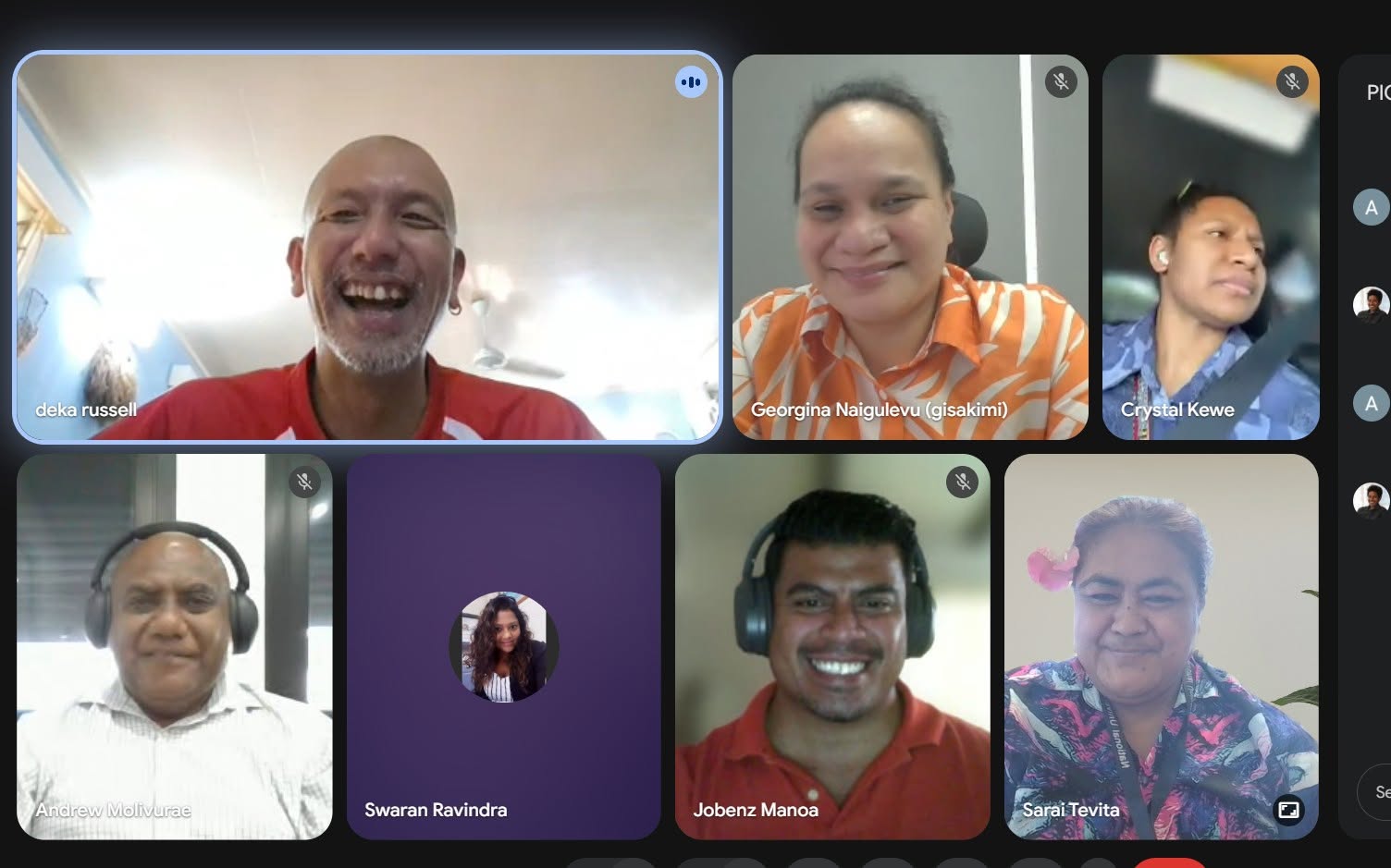
It is an honor to officially announce the PICISOC Board leadership team for 2026. Their extensive experience, strong leadership, and unwavering commitment will guide our organization forward in advancing Pacific ICT initiatives.

2026 Board Composition:

Chair: Russell Deka (Papua New Guinea)

Vice Chairs: Swaran Ravindra (Fiji) & Andrew Molivurae (Vanuatu

Treasurers: Georgina Naigulevu (Fiji) & Swaran Ravindra (Fiji)

Secretary: Sarai F. Tevita (Samoa)

Board Member: Jobenz Manoa (Samoa)

(Note: Edwin resigned effective 24/03/26)

We also extend our sincere appreciation to the outgoing Board Members (2023-2025) Chair – Sarai F Tevita (Samoa), Vice Chairs (Andrew Molivurae (Vanuatu) & Cystal Kewe (PNG), Treasurers – Savenaca Siwatibau (Fiji), Kenneth Katafono (Fiji) and Secretary – Mele Manitisa (Tonga), for their dedicated service and invaluable contributions that have shaped PICISOC’s progress. Thank you for your commitment—we wish you all the very best in your future endeavors!

Congratulations to the new team—let’s continue building a connected Pacific together!

10 February 2026

by Siosaia V.

Welcome to the inaugural edition of the Pacific Cyber Roundup. This monthly digest is designed to keep you informed by aggregating relevant news and blogs on developments and issues around digital advancements, cybersecurity and online safety issues across the Pacific Island countries.

February 2026 presents a Pacific Islands region progressing critical maturity in cyber governance while confronting escalating online harms that test institutional capacity. This month saw Fiji’s Cabinet endorse its National Cybersecurity Strategy 2026-2031, establishing comprehensive frameworks for cyber-aware communities, incident response capabilities, and workforce development. Papua New Guinea approved a USD 120 million submarine cable program enhancing regional connectivity, while AUT and Tonga National University launched a joint Computer Science Research Centre marking academic collaboration in cybersecurity research.

Yet institutional progress coincides with alarming trends. Fiji reports surging online extortion cases with weekly complaints from women targeted for intimate image exploitation, approximately 60% of cybercrime involving image-based abuse. New Zealand’s Financial Markets Authority warns of high-risk scams targeting Pacific communities, while courts hand down deterrent sentences under Fiji’s Online Safety Act demonstrating enforcement taking hold. Technology-facilitated threats are silencing Pacific journalists through coordinated harassment, and e-wallets cost Fiji up to USD 50 million in lost revenue highlighting digital governance gaps.

The contrast between strategic advancement and operational challenges defines February 2026: frameworks adopted, enforcement activated, infrastructure funded—yet online harms intensifying, revenue leakage unaddressed, journalists silenced. This month reveals that cyber governance maturity requires simultaneous excellence in strategy, enforcement, and adaptation to emerging threats. Pacific nations possess the institutional frameworks; February tests whether they can operationalise them at the speed and scale digital threats demand.


Article content
  • Fiji Cabinet Endorses National Cybersecurity Strategy 2026-2031 (FBC News)
  • Fiji Establishes New Cybercrime Directorate to Boost Police Response (FBC News)
  • Deterrent Sentence Sought in Online Safety Act Case (FBC News)
  • Outdated Laws Hindering Justice for Online Crime Victims (FBC News)
  • E-Wallets Cost Fiji Up to USD 50 Million in Lost Revenue (Fiji News)
  • Samoa Minister Champions Digital Safety (Islands Business)
  • Misinformation Could Undermine Democracy Says Dialogue Fiji (Fiji Village)
  • Misinformation and Scams Threaten National Stability: Nadakuitavuki (FBC News, Fiji Sun, Fiji Village)
  • OPINION | Dark Web, Drug Waves, and the Pacific Pipeline (Fiji Times)
  • Call for youth protection in cyberspace (Fiji Times, Fiji Sun)

Article content
  • Sāmoa, Australia Sign New $2.3m Cyber and Regional Policing Deals (PMN, CyberDaily, foreignminister.gov.au, Samoa Global News, RNZ)
  • Papua New Guinea Approves USD 120 Million Submarine Cable Program (SubTel Forum)
  • ADB and PRIMA Sign Cable Deal to Boost Vanuatu Connectivity (ADB News)
  • AUT and Tonga National University Launch Computer Science Research Centre (AUT News)
  • Fiji Tech Summit 2026 Unites Pacific on AI and Cybersecurity (Fiji Sun)
  • Building Cyber Resilience in Fiji Through Research Partnership (Monash Business School)
  • Japan Launches Cyber Security Training for Pacific Islands (Ministry of Internal Affairs and Communications, JAPAN)
  • OFC Tech Solutions and Alcatel-Lucent Enterprise Partner to Modernise Papua New Guinea’s Digital Infrastructure (Business Advantage PNG)
  • Solomon Islands Empowers School Children to See, Hear, and Move Through Assistive Technology (WHO)
  • PNG DataCo Chief Executive on NTN, Oracle and the Possibilities of AI (Business Advantage PNG)
  • Fiji Airports Taps CG Tech for Major Transformation Project to Overhaul Manual Processes (CRN)
  • PNG Business Urged to Strengthen Cyber Risk Protection (Business Advantage PNG)
  • Public Service Media Help Anchor Reliable Information (DevPolicy, ABC International Development, Islands Business)
  • CEO Lauds Business for Strengthening IT, Cyber Security (The National)

Article content
  • About 60% of Cybercrime Involves Intimate Image Abuse in Fiji (Fiji Village)
  • Online Abuse Rises as Many Women Remain Unaware of Support (Fiji Village, FBC News)
  • Online Harm in Fiji is Recurring and Systematic Says Batiwale (FBC News)
  • Technology-Facilitated Threats Silencing Pacific Journalists (DevPolicy)
  • New Zealand FMA Warns of High-Risk Scam Targeting Communities in Tonga and New Zealand (MondoVisione)
  • Fijians Urged to Avoid SFCVibe Pyramid Scheme (FBC News)
  • Four Face Court Over Online Fraud Cases (FBC News, Fiji Sun)
  • Love In The Time of Scams: Online Romance Traps in PNG (The National)
  • Sextortion Threats Force Victims To Pay Thousands (FBC News)
  • Fiji Faces High Prevalence of Online Crimes (Xinhua)
  • Fiji Football Association warns against online misinformation (Fiji Times)
  • Rising Multifaceted Cybercrime a Growing Concern (FBC News)
  • Rethinking the Use of Social Media (The National)

21 January 2026

Massive Congratulations to Our Pacific Chapter Trailblazers!

We’re proud to celebrate three outstanding Pacific leaders making waves on the global stage this week!

– A huge shout‑out to our Pacific sister @Noia Simona who has been honored with the Pacific Regional Leader Award at PTC ’26 in Honolulu! Your leadership and impact across the telecommunications and digital ecosystem continue to inspire women and communities across the Pacific.

– and Two of our members @kenneth Katafono and @Edwin Liava’a have been appointed as Ambassadors to the Global Blockchain Business Council (GBBC) — a powerful recognition of their innovation, expertise, and commitment to shaping the future of digital technology for our region.

Your achievements uplift our entire region and spotlight the strength, resilience, and brilliance of Pacific talent on the world stage. 🌏💙

We are so proud of you all!

#PacificPride#PTC26#GBBC#PacificLeaders#DigitalPacific#WomenInTech#Blockchain#Telecommunications#IslandInnovation

https://picisoc.org/3936-2/

27 May 2025

Registration for #PACIGF2025 is now open!

📌 Be part of shaping the future of the internet in the Pacific.

👉 General Registration: https://pacigf.eventify.io/p/#/overview

👉 APNIC Ticket Registration: https://pacigf.eventify.io/t2/tickets/30C968

https://picisoc.org/3938-2/

  • Page 1
  • Page 2
  • Page 3
  • Interim pages omitted …
  • Page 40
  • Go to Next Page »

Footer


Fiji
© [1999] The Pacific Islands Chapter of the Internet Society

Copyright © 2026 · Internet Chapters on Genesis Framework · WordPress · Log in